
Published under the clinical direction of Dr. Apurva Tamhane (BHMS, MD, CCMP) & Dr. Rajendra Tamhane (BAMS) | Tamhane Clinic, Pune
Introduction: Clinical Foundation of Diabetic Diet Rules
Following structured diabetic diet rules is one of the most effective strategies for managing type 2 diabetes and prediabetes in outpatient clinical care. In clinical practice, dietary intervention—often termed Medical Nutrition Therapy (MNT)—forms the baseline foundation alongside prescribed pharmacotherapy.
Rather than enforcing restrictive starvation regimens, evidence-based diabetic diet rules rely on understanding how different food groups affect postprandial (post-meal) blood glucose levels, insulin sensitivity, and long-term metabolic health. This guidance makes it very simple to follow the change in food habits and also manage the Insulin shots and medications in the long run.
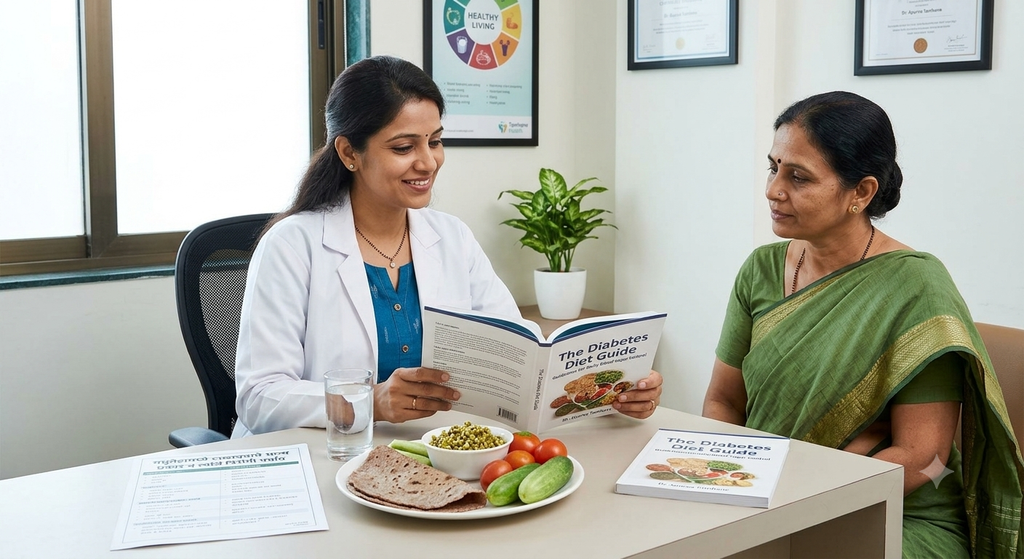
Key Diabetic Diet Rules for Glycemic Control
1. Understanding Glycemic Index (GI) and Glycemic Load (GL)
- Glycemic Index (GI): Measures how rapidly a carbohydrate-containing food elevates blood glucose compared to pure glucose. Foods are categorized into low (Less than or equal to 55$), medium (56 – 69), and high (more than or equal to 70).
- Glycemic Load (GL): Accounts for both the quality (GI) and the actual quantity of carbohydrates in a standard serving size (GL = [GI x Carbohydrates (g)]/100). A low GL is typically 10 or less.
2. Prioritizing Soluble and Insoluble Fiber
Dietary fiber slows down gastric emptying and delays glucose absorption in the small intestine, preventing sharp postprandial glucose spikes.
- Soluble Fiber (Beta-glucans, Pectins): Found in oats, legumes, flaxseeds, and psyllium. It forms a gel-like substance in the digestive tract, improving insulin sensitivity.
- Insoluble Fiber (Cellulose, Lignins): Found in whole grains, green leafy vegetables, and bran. It promotes bowel regularity and enhances satiety.
Applying Diabetic Diet Rules in the Maharashtrian & Indian Kitchen
In routine clinical consultations at Tamhane Clinic, we emphasize practical swaps using locally available kitchen ingredients rather than radical dietary overhauls.
| Food Category | High-GI Items to Limit | Low-GI / High-Fiber Alternatives | Clinical Benefit |
|---|---|---|---|
| Grains & Staples | Polished White Rice, Rava (Sooji), Maida, Sabudana | Jowar (Sorghum), Bajra (Pearl Millet), Nachni (Ragi), Unpolished Brown Rice | Slower glucose absorption, high magnesium content for metabolic health. |
| Legumes & Pulses | Yellow Split Moong/Masoor (Skinless) | Whole Moong, Chana, Kulthi (Horse Gram), Matki | Higher fiber-to-carbohydrate ratio, rich in plant protein. |
| Breakfast Options | White Poha, Upma, Bakery Pav, Instant Oats | Steel-cut Oats, Oats/Ragi Dosa, Moong Dal Dhirde, Red Rice Poha | Reduces early-morning glycemic volatility. |
| Snacks & Beverages | Sugared Masala Tea, Biscuits, Kurmura (Puffed Rice) | Roasted Chana, Flaxseeds, Lemongrass-Tulsi Herbal Decoctions, Black Coffee | Eliminates rapid sucrose spikes between major meals. |
The Plate Method: Practical Diabetic Diet Rules for Meal Planning
To maintain steady postmeal readings without complex caloric math, these simple diabetic diet rules structure your daily plate:
- Half the Plate: Non-starchy vegetables (e.g., Methi, Palak, Dudhi, Karela, Cucumber, Cabbage).
- One-Quarter of the Plate: Complex, low-GI whole grains or millets (e.g., Jowar or Bajra Bhakri).
- One-Quarter of the Plate: Lean protein sources (e.g., Whole Dal, Sprouts, Paneer, or Eggs/Fish where applicable).
Diabetic Diet Rules PDF Download
This clinical reference sheet outlines 30 common Maharashtrian grains, flours, and beverages like masala chai that trigger glucose spikes, pairing them with low-GI alternatives.. The guide is given in English and Marathi languages.
Diabetes Diet Care English Guide
Get the complete copy of Diabetic Diet Guide in English given below:
Diabetes Diet Care Marathi Guide
Get the complete copy of Diabetic Diet Guide in Marathi given below:
External Links
- Indian Council of Medical Research (ICMR) guidelines for diabetes management – https://www.icmr.gov.in/
- WHO recommendations on dietary fiber and carbohydrate intake – https://www.who.int/news-room/fact-sheets/detail/healthy-diet
- Clinical studies on the Glycemic Index and insulin resistance – https://pubmed.ncbi.nlm.nih.gov/
Clinical Disclaimer
This guide is authored for educational reference and does not replace personalized medical advice. Blood glucose targets, medication adjustments, and dietary plans must always be individualized under direct physician supervision.